
Effectively, the election seems to be a five-way race, involving key alliances, a notable first-time contender, emerging smaller players, and influential rebel and caste-driven factions that may play a decisive role in splitting votes.
A look at the upcoming Tamil Nadu battle:
Elections to the 234-member Tamil Nadu Assembly will take place in a single phase on April 23, with counting of votes scheduled for May 4.
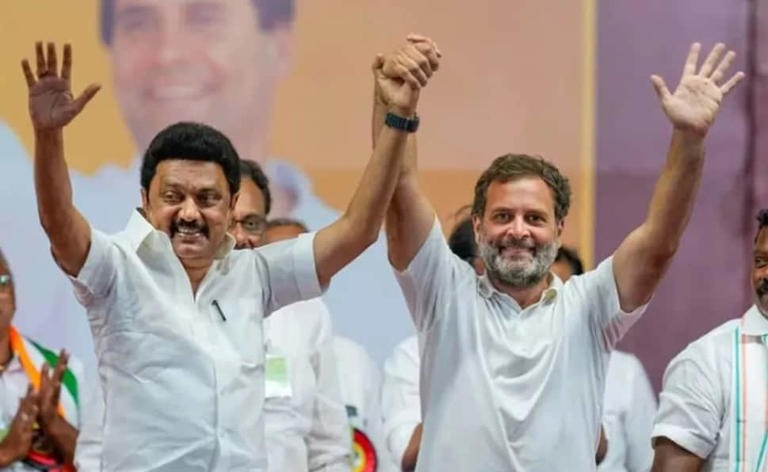
The ruling Dravida Munnetra Kazhagam (DMK)-led alliance, headed by chief minister MK Stalin, is at the centre of the electoral battle, with the coalition seeking a second term after victories in 2019, 2021 and 2024.
The alliance includes the Indian National Congress and several regional partners, and has recently expanded to include Makkal Needhi Maiam led by Kamal Haasan, as well as the Desiya Murpokku Dravida Kazhagam founded by Vijayakanth.
The DMK has centred its campaign on welfare schemes such as free bus rides for women and direct financial assistance, while projecting strong economic performance. It has framed the contest as a fight between Tamil Nadu and the NDA, accusing the Bharatiya Janata Party of pushing the three-language policy and Hindi imposition.
Opposition parties have countered by raising concerns over law and order, crimes against women, drug-related issues and allegations of dynastic politics.
Stalin has also pledged to double financial assistance for women if voted back to power.
On the other hand, the All India Anna Dravida Munnetra Kazhagam (AIADMK)-led National Democratic Alliance (NDA) is gearing up for the Tamil Nadu Assembly elections under the leadership of Edappadi K Palaniswami, positioning him as the chief ministerial face.
The alliance includes the Bharatiya Janata Party, which is contesting 27 seats, the Pattali Makkal Katchi (18 seats, led by Anbumani Ramadoss’s faction), and the Amma Makkal Munnetra Kazhagam (11 seats, headed by TTV Dhinakaran), along with smaller players.
The Tamilaga Vettri Kazhagam (TVK), floated by actor Vijay, is entering the electoral fray independently, without aligning with either the NDA or other alliances.
Positioning itself as an alternative to established players, the party is targeting youth voters, anti-establishment sentiment and Tamil identity politics. Vijay has projected the TVK as a direct challenger to the ruling dispensation while also taking aim at the BJP.
Political observers believe the party could emerge as a significant vote-splitter, particularly in urban centres and southern districts, potentially impacting both the DMK and AIADMK in a multi-cornered contest.
However, the TVK’s inability to secure strong alliances, coupled with the shadow of the Karur rally stampede, has raised concerns about its organisational strength and leadership readiness. Observers note that several actors in the past, including Sivaji Ganesan and Vijayakanth, struggled to convert popularity into electoral success, while Rajinikanth ultimately chose to stay out of active politics.
Meanwhile, Naam Tamilar Katchi, led by Seeman, remains a consistent player, contesting independently with a steady vote share of around 8.5 per cent, driven by a strong pro-Tamil and nationalist narrative.
Adding another layer of complexity is a late political development involving VK Sasikala and S Ramadoss, who are reportedly working towards an understanding aimed at countering leaders they view as “betrayers,” including Edappadi Palaniswami, TTV Dhinakaran and Anbumani Ramadoss. The move could further fragment caste-based vote banks.
